

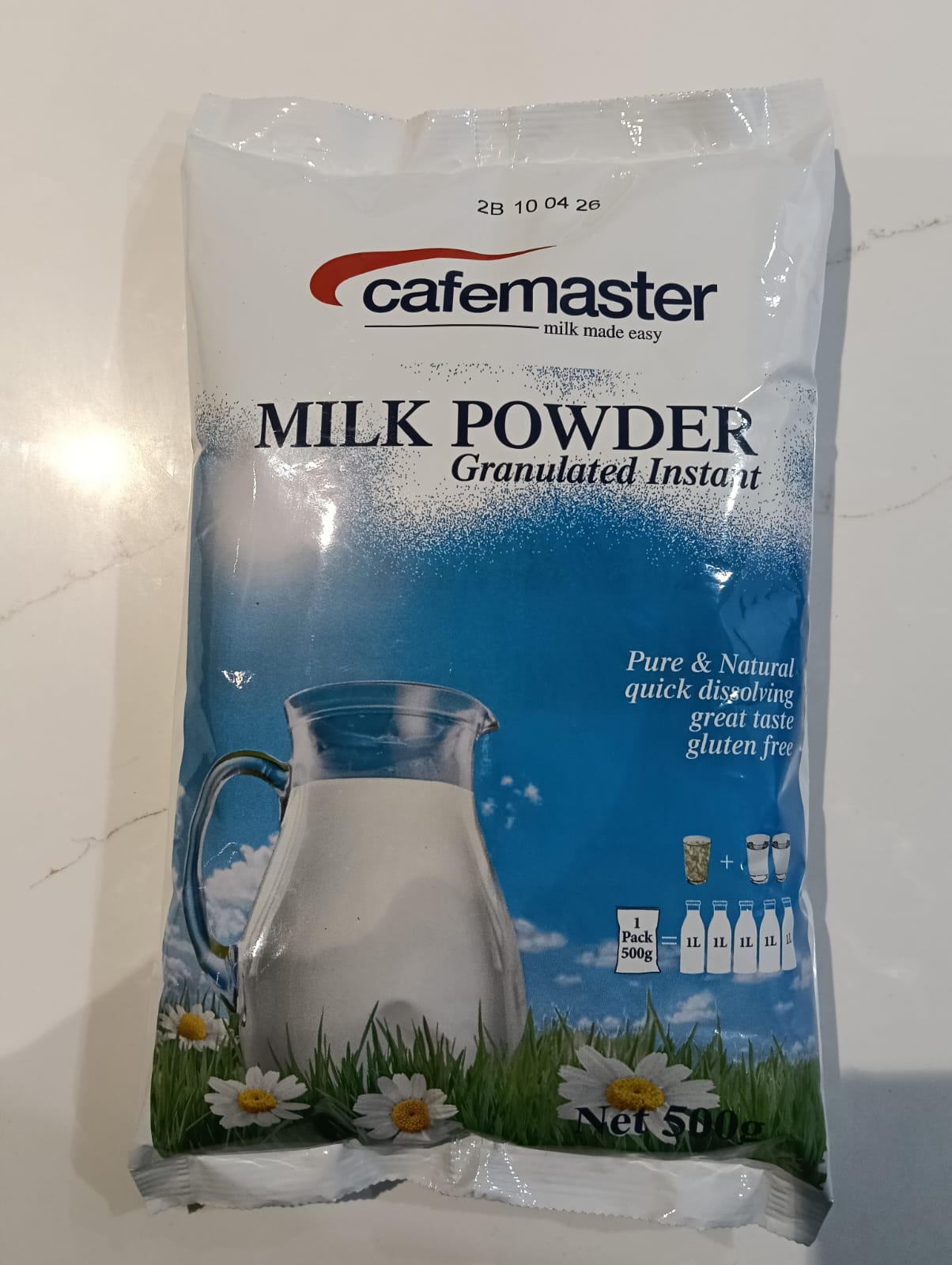
Granulated Milk Economy Pack $19.00 (500 g)
Using granulated milk in coffee or other beverages is one of the latest trends in the coffee or barista business. Also, we see granulated milk in households, but do we know what we are consuming and where it comes from?

Description
History of Granulated Milk:
When ordinary milk is evaporated, pasteurized, and spray-dried into powder form, we get granulated milk. The first commercial production of dried milk was organized by the Russian Chemist M. Dirchoff in 1832; granulated milk was first used in the late 19th century and made readily available to consumers. It was an instant hit as granulated milk is easier to store, transport, and has a longer shelf life because of its manufacturing process.
Uses of Granulated Milk:
Granulated milk is a popular substitute for fresh milk that is used in the preparation of various food items and culinary applications, viz, coffee, tea, and other beverages.
Granulated milk is trusted by advanced coffee shops and cafés for making that perfect cup of latte, cappuccino, and mocha. Granulated milk can do wonders if achieved in the right consistency and flavor. It can give us that perfect fresh milk taste in coffee and other milk beverages.
Granulated milk can also be used for baking and cooking. As granulated milk is easy to store and can be preserved for months and longer periods, it is loved by professional chefs and home cooks when it comes to preparing dairy or food items that call for a longer shelf life. It can also be used for preparing yoghurt, cheese, sauces, ice creams, baby food, etc.
But with benefits come a few drawbacks as well.
Granulated milk can be a disaster if not prepared properly. It can be clogged, or lumps may appear if the right amount of water or liquid is not used. Also, a few brands that offer granulated milk add sugar and preservatives that may reduce the freshness and goodness of the product’s overall standard or quality over time.
Also, the instantization or agglomeration process can affect the flavor and texture of granulated milk, as it is done in batches, and each batch can taste differently.
How to Use Granulated Milk:
Take the right measures of water and granulated milk into a bowl and mix consistently until the preferred consistency is achieved. Usually, the measurements are mentioned on the pack, but it is good to keep in mind that water can be added accordingly. Whisk the mixture steadily and make sure that there are no lumps or masses in the end. When you get the desired consistency and texture, you can add this granulated milk to your recipe, coffee, or tea, and enjoy that exotic taste thoroughly.
Summary:
Granulated milk can be prepared using the right proportion of granulated milk and water. Different food items and beverages require different amount of granulated milk and therefore, it should be prepared accordingly. Get the right consistency by adding the right amount of water to granulated milk or powder. Also, you can always experiment with different flavors of granulated milk to add a unique element to your culinary creations
Reviews
There are no reviews yet.